

 ENG
ENG  русский
 Español
 عربى
عربىWhy is it called a keystone jack? (Detailed technical explanation)
2025-12-22
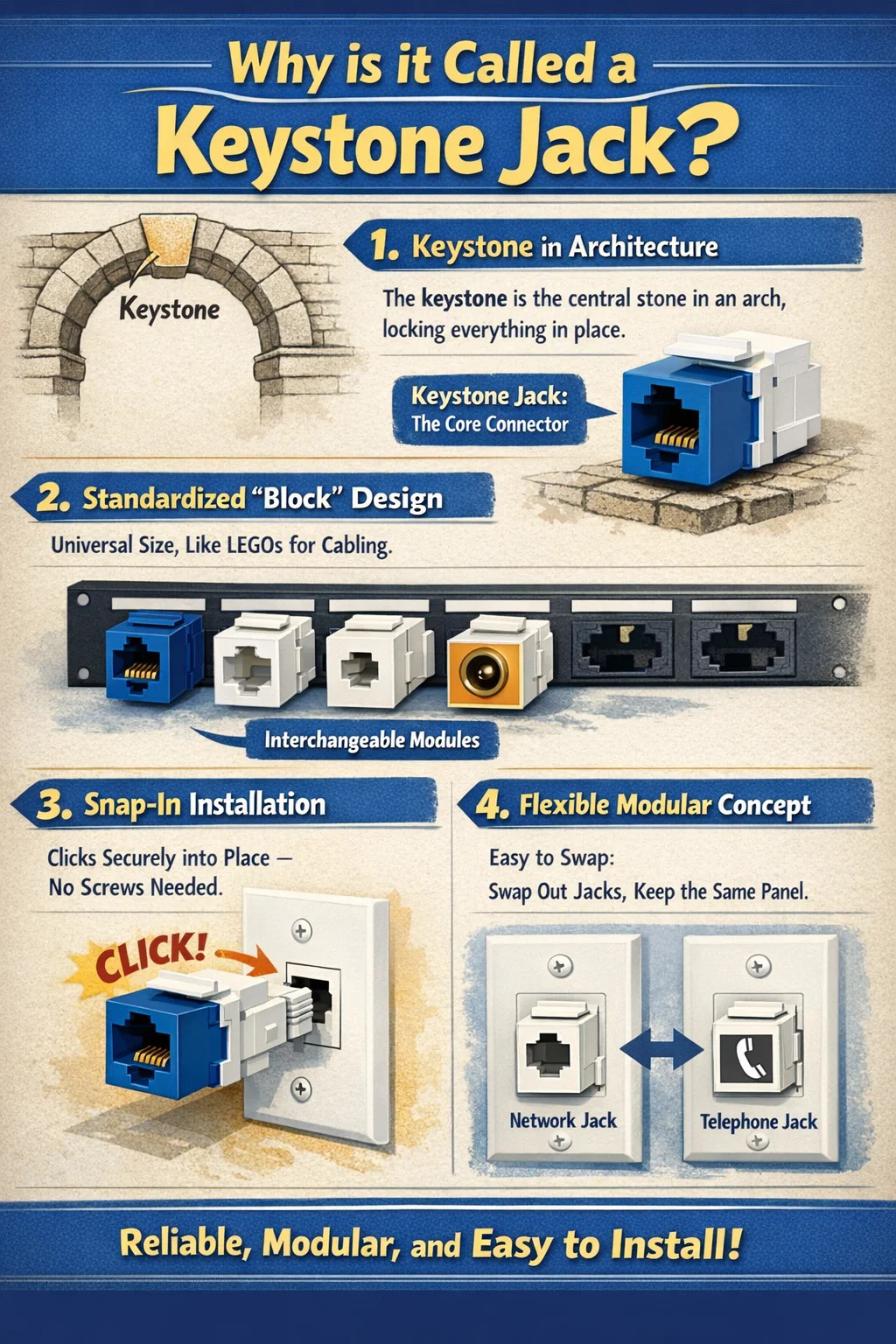
The reason why this network connector is called a Keystone Jack is due to a very apt analogy related to its design and installation method.
Here's a detailed breakdown:
Content
□ Origin of the Name: The "Keystone" in Architecture
In traditional stone architecture (such as arched doorways), the stone at the top center is called the "Keystone." This stone plays a crucial role in securing the entire structure; without it, the entire arch would collapse.
Network products borrowed this term mainly because the Keystone Jack plays a similar role in modular cabling systems:
Core of the Structure: It is the core component on the wall panel or patch panel.
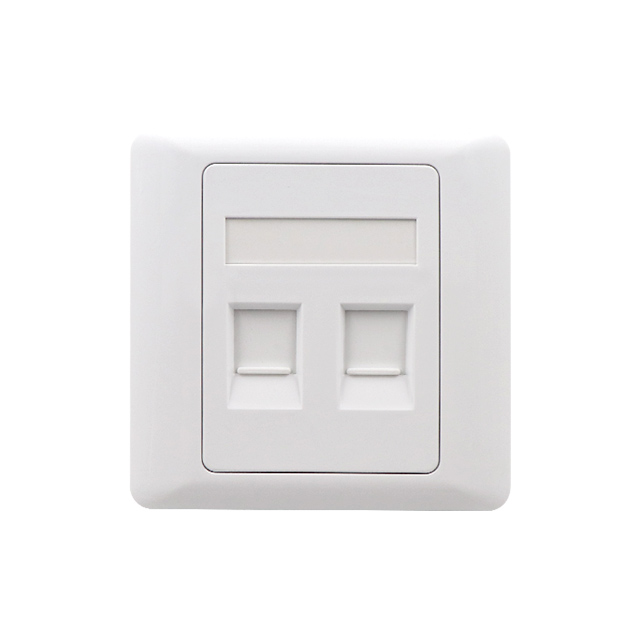
Key to Stability: Just as the keystone is precisely fitted into the center of the arch, this connector is also precisely fitted into the opening in the panel.
□ Standardized "Block" Design
The most important reason why the Keystone Jack is called by this name is its highly standardized shape and installation specifications:
Universal Shape: This connector has a standard rectangular front, and regardless of whether it's for network cables, telephone lines, or video cables, their outer frame dimensions are exactly the same.
Like LEGOs: Because the dimensions are fixed, you can combine different connectors on a single panel. This high degree of compatibility makes it an indispensable standard component in cabling projects.
□ Unique "Snap-in" Installation Logic
The "Keystone" in the name also reflects its physical installation process:
Snap-in Fit: When you push the Keystone Jack into the wall panel (Faceplate), it usually makes a "click" sound, securely locking into place with its built-in spring clip.
No Screws Required: This installation method does not require special screws for fixing, just like stones are tightly fitted into the building structure, making it both stable and neat.
□ Flexible Modular Concept
In the field of network cabling, the Keystone Jack represents a "free assembly" concept:
Flexible Replacement: If you want to change a network port to a telephone port during home renovation, you don't need to remove the entire panel; you only need to pop the old Keystone Jack out from the back of the panel and replace it with a new one. Uniform appearance: Because all modules follow the same "Keystone" standard, the wall panel will still look neat and consistent regardless of which type of connector you use.
Are you ready to
cooperate with PUXIN?
cooperate with PUXIN?
Contact us to find out how our products can transform your business and
take it to the next level.

Ningbo Puxin Electronic Technology Co., Ltd. is a professional supplier of electrical engineering and integrated wiring product research and development and manufacturing.
Quick Links
Products
Keep In Touch
-

No.43 of Xiaotuanpu Road, Guanhaiwei Town, Cixi Ningbo City, Zhejiang, China
-

-

8615924366333
-

Mobile web